
How Specification Errors Multiply on Multilingual Dubai Renovation Sites
A Dubai villa renovation routinely involves a designer working in English, a main contractor supervising in English and Hindi, joinery subcontractors reading drawings in Urdu or Malayalam, a stone supplier quoting in Italian, and an owner discussing changes in Arabic or Russian. Every one of those handovers is a point where a dimension, a finish code or a revision number can change meaning without anyone noticing.
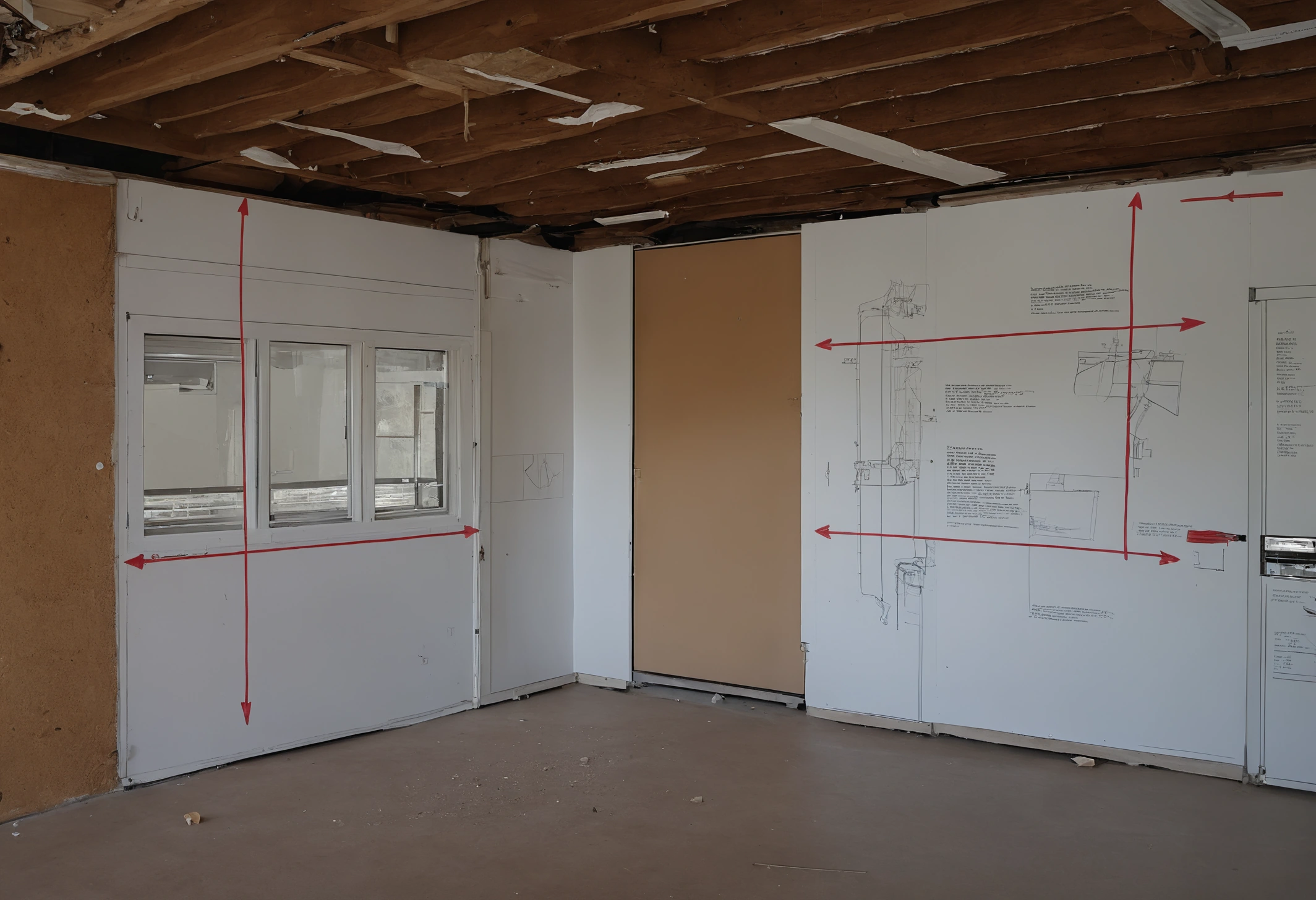
Unit and format conflicts cause the most expensive rework
Unit and format conflicts produce the costliest errors on Dubai sites because the mistake is invisible until material arrives. A stone slab cut to 1,200 mm when the drawing intended 1,200 mm but the fabricator read an imperial conversion arrives 4 mm short, and a 4 mm gap in a book-matched wall panel cannot be closed.
| Conflict | How the error appears | Typical consequence |
|---|---|---|
| Millimetres against inches | Fabricator converts and rounds to the nearest 1/16 inch | 1 to 4 mm cumulative error across a run |
| Decimal comma against decimal point | 2,5 m read as 25 m or as 2 m | Wrong material quantity ordered |
| Finish reference systems | RAL, NCS and Pantone codes used interchangeably | Colour delivered outside the intended tone |
| Date formats on revisions | 03/04 read as 3 April or 4 March | Superseded drawing built |
| Room naming | Bedroom 2 on the plan against Guest Room on the schedule | Finishes installed in the wrong room |
Colour reference is the conflict that produces the most argument and the least documentation. The RAL colour standard, the Natural Color System and Pantone are separate systems built for separate industries, and a designer writing “grey, RAL 7044” who receives a Pantone approximation from a supplier has no basis for rejection unless the specification named the system explicitly and the sample was signed.
Verbal site instructions are the second failure mode
Verbal instructions given on site, in a shared second language, under time pressure, account for a large share of Dubai renovation disputes. An instruction understood, agreed and executed can still be wrong, because agreement in a second language often signals politeness rather than comprehension.
Three mechanisms convert a verbal instruction into a defect:
- Confirmation without comprehension. A nod and a yes on a noisy site records willingness, not understanding of a 12 mm shadow gap.
- Instruction without a drawing. A change described in words has no dimensional record, so the executed version cannot be measured against an intent.
- Instruction to the wrong party. A change given to a labourer rather than the foreman never reaches the subcontractor who prices variations.
An instruction that exists only as speech has no revision number, no date and no author. A defect built from speech cannot be attributed, which is precisely why it becomes a dispute.

What a language-proof specification packet contains
A language-proof specification packet replaces prose with dimensioned drawings, coded schedules and physical samples, because a dimension and a signed sample carry the same meaning in every language on site. Packets built this way reduce interpretation to almost nothing.
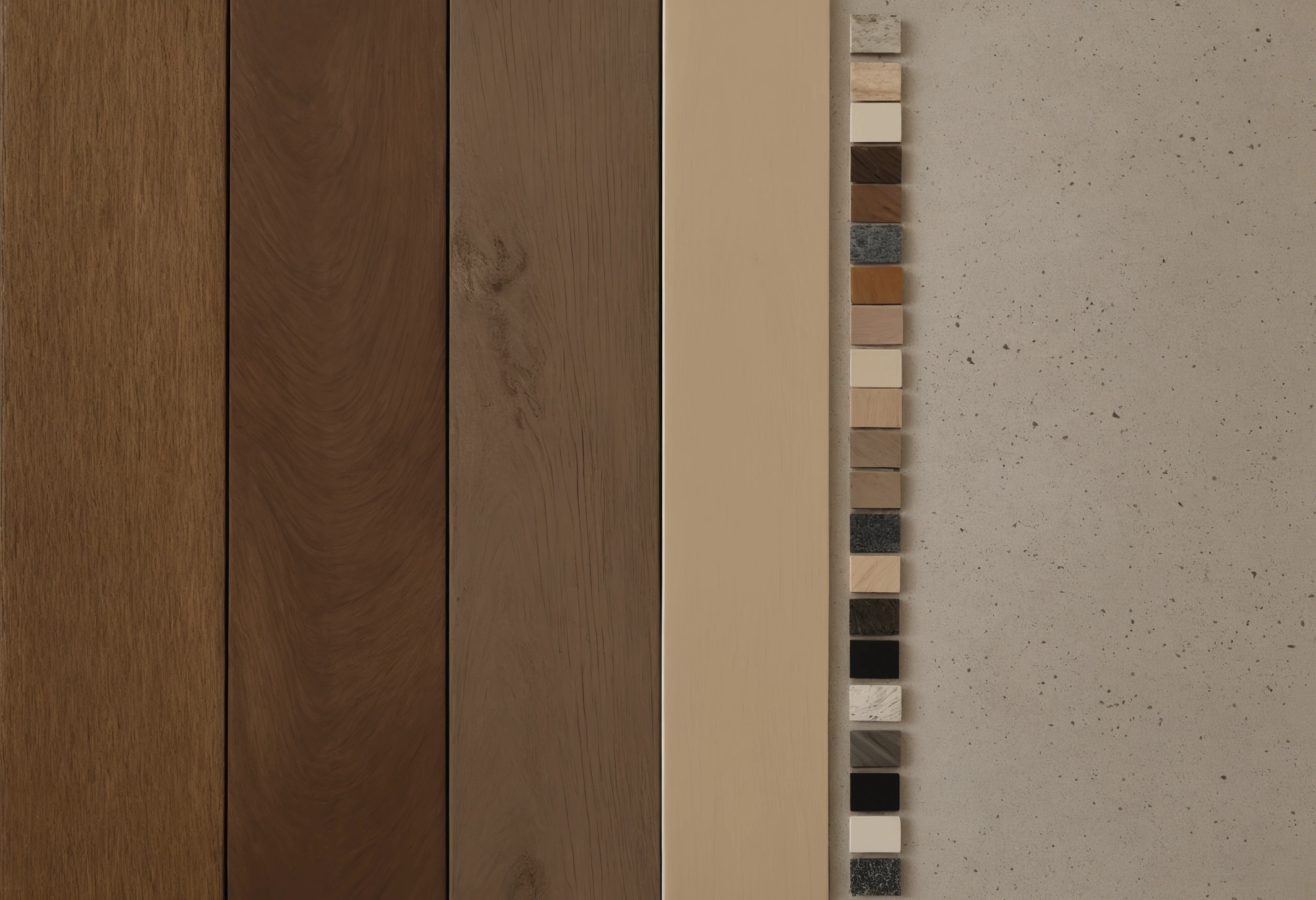
Samples do the heaviest lifting. A signed 300 by 300 mm stone sample removes every adjective from a stone discussion. Words such as light, warm, veined and matte translate poorly and carry different associations across languages, while a physical tile does not translate at all because it needs no translation.
Drawing conventions that reduce interpretation on Gulf sites
Several drawing conventions measurably reduce misreading on multilingual sites, and each one removes a category of ambiguity rather than explaining it away.
- Single-unit drawings
- Every dimension expressed in millimetres, with no dual dimensioning. Dual-dimensioned drawings invite a fabricator to work from the converted figure.
- Absolute setting-out
- Dimensions taken from a single datum line rather than chained element to element, which stops small errors accumulating across a wall run.
- Graphic finish keys
- A hatch or colour key on the drawing itself, so the finish is visible in the drawing rather than only in a separate schedule that may not be printed.
- Revision clouds with letters
- Changed areas clouded and lettered, so a site team can see what changed without reading a description.
Why single-contract delivery reduces the number of handovers
Each additional company on a renovation adds a language boundary and a commercial boundary at the same point. A project split between a designer, a separate fit-out contractor, a separate furniture supplier and a separate joinery workshop contains at least three handovers where drawings change hands and responsibility becomes negotiable.
Consolidating design, procurement and installation into one contract collapses those handovers. Studios offering interior design and fit-out in Dubai under a single scope hold the drawings, the schedules and the site supervision in one office, which means a misread dimension is corrected internally rather than argued between two companies with different insurers.
Furniture procurement carries the same logic. A sofa specified by a designer, ordered by an owner and delivered by a third party has three parties able to blame the other two when a fabric arrives in the wrong batch. A showroom holding stock of designer Italian furniture and handling its own delivery answers for the order end to end.
The regulatory layer that punishes poor documentation
Renovation work touching structure, drainage, external appearance or building services in Dubai requires approval, and approval requires drawings that match what will be built. Applications submitted through Dubai Municipality are assessed on documents, so a project running on verbal instruction accumulates a gap between the approved drawing set and the constructed reality.
The gap becomes expensive at two moments: when a variation needs re-approval mid-project, and when a property is sold and the buyer’s surveyor compares the as-built condition to the approved drawings. Renovations documented properly pass both moments without cost. Renovations documented loosely pay twice.

A practical test for any Dubai renovation contract
One question exposes whether a renovation is documented well enough to survive its own language boundaries: ask who holds the signed sample of every finish, and how many sets exist. A project with duplicate signed samples and a lettered revision register will absorb a translation error without a dispute. A project where finishes live in an email thread will not.
Dubai’s construction workforce is genuinely multilingual and consistently capable. The failures described here are documentation failures rather than skill failures, and documentation is the one variable an owner can fix before work starts.